Wednesday, October 12, 2016

My Games versus Prestia Brothers

Last weekend, I played against all three Prestia brothers at the Marshall Chess Club.

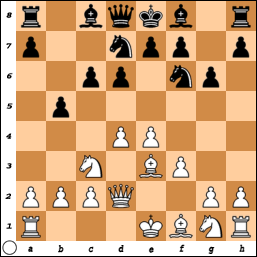
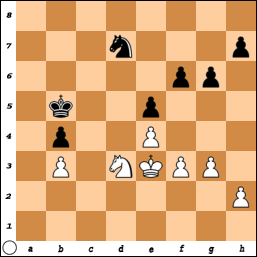
Round One: Owen Defense

Jim West (USCF 2200) - Frank Prestia (USCF 1723), Marshall Chess Club 10/8/2016

1.e4 e6 2.d4 b6 3.Bd3 Bb7 4.Nh3 c5 5.c3 cxd4 6.cxd4 Bb4+ 7.Nc3 Nf6 8.f3 O-O 9.O-O d6 10.Be3 Nbd7 11.Rc1 Qe7
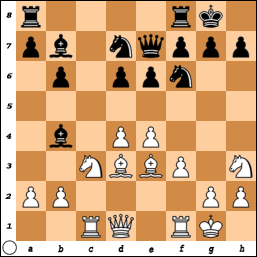

12.a3 Bxc3 13.Rxc3 Rac8 14.Rxc8 Rxc8 15.Qd2 e5 16.Rc1 Rxc1+ 17.Qxc1 Qd8 18.Bb1 Qc8 19.Qxc8+ Bxc8 20.Ba2 h6 21.Nf2 Ba6 22.Nd1 Nb8 23.dxe5 dxe5 24.Nc3 Nc6 25.Nd5 Nxd5 26.Bxd5 Ne7
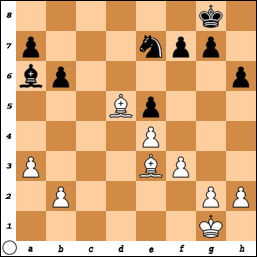

27.Ba2 Kf8 28.b4 Ke8 29.Kf2 f5 30.exf5 Nxf5 31.g4 Nxe3 32.Kxe3 Ke7 33.Bd5 Kd6 34.Ba8 Ke6 35.h4 Bc4 36.Ke4 Bb3 37.h5 Bc2+ 38.Ke3 Bb3 39.Bb7 Bd5 40.Bc8+ Kf6 41.a4 a5 42.bxa5 bxa5 43.Bd7 Ke7 44.Bb5 Kf6
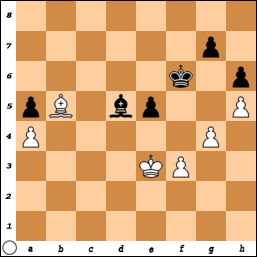

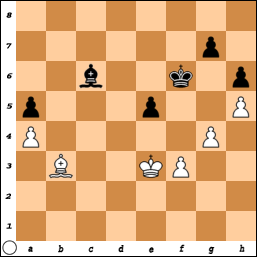
45.Bd7 Bb7 46.Bf5 Bc6 47.Bc2 Ke6 48.Bb3+ Kf6 49.Bd1 Ke6 50.Bb3+ Kf6, draw.


          *          *          *          *          *          *          *          *

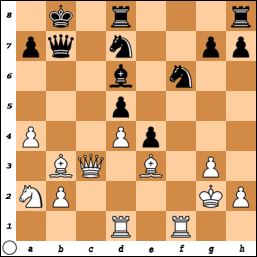
Round Two: Dutch Defense

Sebastian Prestia (USCF 1589) - Jim West (USCF 2200), Marshall Chess Club 10/8/2016

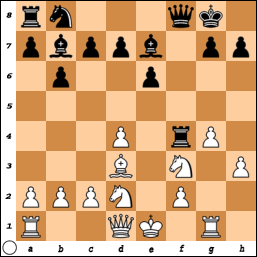
1.d4 f5 2.Nc3 Nf6 3.Bg5 e6 4.Nf3 Be7 5.e3 b6 6.Be2 Bb7 7.h4 a5 8.h5 h6 9.Bh4 d6 10.Bxf6 Bxf6 11.Qd2 Qe7 12.Rh3 Na6 13.a3 O-O
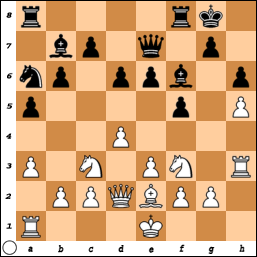

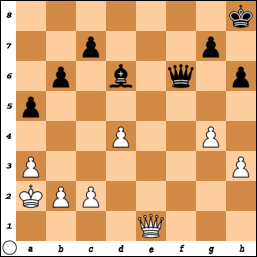
14.g3 e5 15.d5 Nc5 16.Nh4 Bxh4 17.Rxh4 f4 18.exf4 exf4 19.Rxf4 Rxf4 20.Qxf4 Rf8 21.Qd4 Ba6 22.Qe3 Qf7 23.Kf1 Re8 24.Qf4 Bxe2+ 25.Nxe2 Qxh5 26.f3 Rf8 27.Qd4 Qxf3+ 28.Kg1 Qxe2 29.Rc1 Rf3
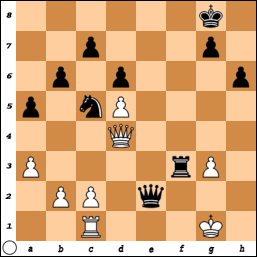

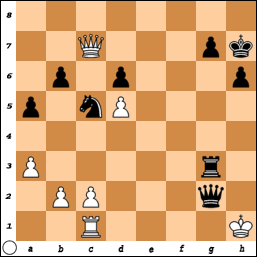
30.Qg4 Qf2+ 31.Kh1 Rxg3 32.Qc8+ Kh7 33.Qxc7 Qg2#.


          *          *          *          *          *          *          *          *

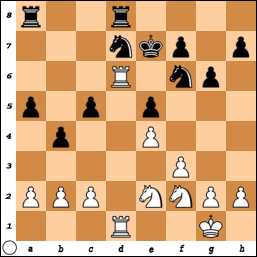
Round One: Owen Defense

Jim West (USCF 2200) - Paris Prestia (USCF 1796), Marshall Chess Club 10/9/2016

1.e4 e6 2.d4 b6 3.Bd3 Bb7 4.Nh3 c5 5.c3 Nf6 6.f3 Nc6 7.Be3 cxd4 8.cxd4 Be7 9.O-O Nb4 10.Nc3 Nxd3 11.Qxd3 O-O 12.Rac1 d6 13.Rfd1 Qd7
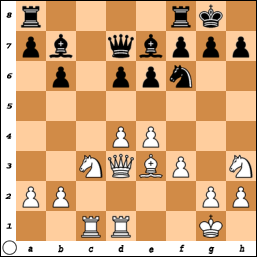

14.Nf4 Rfd8 15.d5 e5 16.Nfe2 Rac8 17.a4 Qe8 18.Ng3 Nd7 19.b4 g6 20.a5 bxa5 21.bxa5 Nc5 22.Qb5 Ba6 23.Qxe8+ Rxe8 24.Nce2 Nb3 25.Rxc8 Rxc8 26.Bxa7 Nxa5 27.Rc1 Rxc1+ 28.Nxc1, draw.
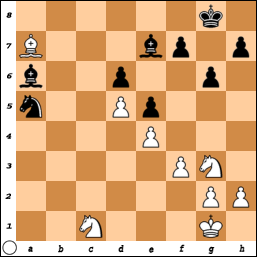

Tuesday, October 11, 2016

"Newsday" Article on Prestia Brothers

Chess is king for the Prestia brothers

Wading through a sea of soccer balls, chessboards, model rockets, video games and toys in the playroom of their Lloyd Harbor home, the Prestia boys pondered a question: What do they want to be when they grow up?

“A paleontologist!” declared Sebastian, pronouncing the 14-letter word with impressive precision for a 6-year-old. “I like dinosaurs.”

“A physicist,” said Frankie, 8. “I love space.” 

“A surgeon and a lawyer,” said oldest brother Paris, 10. 

Rosanna, their mother, laughed at the precocious responses. “Doesn’t anyone want to be a grandmaster?” she asked. 

Paris looked up from the chessboard, where he was engaged in yet another impromptu match with one of his siblings. 

“Is that even a job?” he asked. 

An excellent question. 

“It can be,” said seven-time U.S. women’s champion and grandmaster Irina Krush of Brooklyn. Krush, , 32, is a chess player and coach and works with the Prestia boys — avid chess players who, at very young ages, have already achieved much in the so-called Game of Kings — at the famed Marshall Chess Club in Manhattan, which produced grandmaster Bobby Fischer. “Plenty of people who have become grandmasters moved on to do other things in other fields, like finance or computer programming,” she added. 

“Plenty” is a relative term, as only 86 Americans still living have attained the title of grandmaster, according to the U.S. Chess Federation. And although there are people who have achieved the title in their teens, becoming a grandmaster — often described as a sort of a “doctorate of chess” — is a product of long years of study and high performance in competitions. 

There are some in the chess world, including Krush, who think all three Prestia boys have what it takes to join those elite ranks, should they choose. Earlier this summer, Sebastian was ranked the No. 1 6-year-old player in the country by the federation (out of 1,746 players of that age ranked by U.S. Chess). Frankie was ranked ninth in his age group, and Paris is in the top 30 nationally. 

The rankings change monthly, based on tournament play, and as of September, Sebastian was ranked third in his age group; Frankie was 10th, and Paris was 53rd. 

“All three of them are very advanced for their age,” Krush said, although she believes that Sebastian may have the most potential, in part because as the youngest he has had the benefit of playing against older competitors (his two brothers) on a daily basis. “For him, the door is totally open,” Krush added. 

While the boys work hard at chess, they also seem to have inherited a talent for the game: Their father, Frank, was an accomplished player as an adolescent, although playing chess for him fulfilled a very different role than it does in the life of his sons, who see it as challenging fun. 

Frank Prestia, 45, grew up in Roslyn in the 1980s, the son of Italian immigrants. He played, he said, because he believed proficiency at the game could help shatter some stereotypes that he felt keenly as a teenager. 

“I didn’t have to be Vinnie Barbarino or the Fonz,” he said, referring to two notable Italian-American TV characters of the 1970s. “I could be someone intelligent.” 

The image of Italian youths as little more than leather-jacketed hoodlums or class clowns (a la John Travolta and Henry Winkler’s characters in “Welcome Back, Kotter” and “Happy Days,” respectively) was still a pervasive one at the time. Prestia’s chess-playing ability helped give him the confidence to overcome that. 

“Because I could beat the smartest kids in chess, I felt I could compete with them in academics as well,” he said. 

Which he did: Prestia went on to the State University of New York in Geneseo, becoming the first in his family to attend college. He majored in philosophy and while there, also raised money to start a chess club that is still active on the campus. He later graduated law school at St. John’s. He met wife Rosanna, who grew up in Boca Raton, Florida, in an early internet-era chat room in 1998. “We talked about Greek philosophers,” said Rosanna. 

Taking up the game 

When Paris was 7 and came home from school one day with a chess set, excited by the idea of knights and castles, his father explained to him the basics of the game, but was wary of further encouragement. 

“I didn’t want him to do it because I did it,” he said. “I didn’t want to pigeonhole him.” 

The boys seemed to love the game, however, and when at their insistence their father enrolled them in a local youth chess group, the Smithtown Chess Nuts, in early 2014, their talent was quickly recognized by club founder Harold Stenzel. 

“Those boys improved so quickly, they kind of outgrew me” and the Chess Nuts, Stenzel said. 

“He recommended to us that we bring Paris and Frankie to a chess tournament,” Frank Prestia said. “I was firmly against it, but Harold kept recommending it, and Paris and Frankie really wanted to play, and they convinced Rosanna.” 

The boys took more advanced lessons at the Long Island ChessMates centers in Stony Brook and Syosset, and this past January began studying with grandmasters Giorgi Kacheishvili and Krush at the Marshall Chess Club. Their class is on Monday evening. In addition, the boys — who attend the private Lloyd Harbor School, for students in grades 2-6 — practice the game daily. 

Things change, though, when a match looms: the evening before a competition is chess-free. “The night before, we just do what we want to do,” Paris said. “We try to relax. We play Ping-Pong, we watch movies and TV.” 

On the day of a match, the boys’ attention turns to mental preparation. “I’m thinking about what my opening is. And thinking about what [the opponent] might do,” Frankie said, adding that he has “played a bunch of people a bunch of times,” so he has some familiarity with opponents on the other side of the board and their style of play. 

Still, practice and studying are a must. “I like the studying,” Paris said. “It’s good to learn to get better.” 

“I don’t think it’s that fun,” Frankie retorts. “But if you don’t study and practice you don’t play, and that’s the most exciting part.” 

Victory has its place, too. 

“I like winning and getting trophies,” Sebastian said. “And seeing my rating going up.” 

And there’s one other thing: “I like solving puzzles in chess,” Sebastian said. 

According to Ohio State University research psychologist Joanne Ruthsatz, having three children in one family who are exceptional performers in the same discipline is “very uncommon.” Ruthsatz is co-author of a new book, “The Prodigy’s Cousin,” and while she agrees with Frank and Rosanna Prestia that showing their children the value of hard work and practice is important, ultimately, she said, talent wins out. 

“Do I think their practice helps?” said Ruthsatz, who has interviewed and studied dozens of prodigies in various fields. “Definitely. Do I think any child could do what they do in chess, even with millions of hours of practice? No. I wanted to be Barbra Streisand and I love to sing . . . but no way.” 

Jean Hoffman, executive director of the U.S. Chess Federation, the game’s national governing body, said the Prestias are among a growing number of outstanding young American players. 

“We’re seeing record-setting achievements by our young players,” she said. “Across the board, they’re getting younger, getting higher ratings at a young age.” 

Tournaments, trophies and time for tennis 

This past summer, the Prestias competed in more than a half dozen tournaments, from Windsor, Canada, to Nashville, Tennessee, as well as in local competitions. Though chess has been an important focus, their parents have also tried to make sure the siblings enjoyed some of the kind of summer activities many Long Island children their age would: This past summer, the boys also attended camp, took tennis lessons and went swimming and kayaking. 

Clearly, though, they enjoy the game. On a weekday afternoon in late August, Paris and Sebastian were eager to show off their skills as they faced off against each other over one of the many chessboards in their home. “I know how he plays,” said Paris, with the wisdom of the older brother, “so I’m doing a special thing against him.” 

What that “special thing” is — a gambit to trap the opponent’s king in a series of moves known as the Mating Net — might be difficult for nonplayers to even conceptualize. “Chess is not about thinking a couple moves ahead,” said their father, watching the boys play. “You have to be thinking seven or eight moves ahead.”

In the time it took Frank Prestia to explain this to a chess novice, Paris had snared his brother in the Net and the game was over. The boys’ excitement then shifted to showing off what they said is the best thing about chess. 

“Trophies!” they roar in unison. 

Here, they are indeed similar to most Long Island children, eager to add to the hardware accrued from soccer or flag football or Little League. And not unlike most siblings, they are competitive with each other as to who has the most, a debate that is settled on this day only by counting the trophies that cram the bookshelves in each of the boys’ rooms. For the record, as of late August, Paris has 35, Frankie has 26 and Sebastian has 22 — a deficit he attributes to the fact that “they’re older.” 

Rosanna Prestia said chess gives her sons “focus and discipline.” At that very moment, two of her children, already on to another game, get into a loud argument about who checkmated who first. “Hopefully,” she added with a grin. 

For those serious about chess 

Chess has a long history on Long Island, and among its enthusiasts is Harold Stenzel, president of the Nassau Chess Club, a group he said has been active since at least 1950. 

Stenzel, 63, of Sayville, took up competitive play after the widely publicized Bobby Fischer-Boris Spassky match in 1972. “It was on TV three days a week,” Stenzel recalled. 

The Nassau Chess Club meets Mondays in Mineola from 7 to 11:30 p.m. at First Presbyterian Church, and also holds frequent tournaments. Stenzel said attendance averages 50 to 60 people of all ages. 

Neal Bellon of East Meadow is director of the Long Island Chess Club, the local affiliate of the U.S. Chess Federation, which he said has about 40 active members. Bellon, 44, began playing seriously 20 years ago. “I wanted to do more than just play at my kitchen table,” he said, noting that tournament play requires greater time and commitment. “That’s when I started playing competitively.” 

Lalit Balwani of Holtsville has made that leap to tournament play. Balwani, 39, grew up playing chess in his native India, then picked it up again when he introduced his daughter, then almost 6, to the game just over a year ago. Now he plays with the Long Island Chess Club. “It’s fun,” Balwani said. “For 1½ hours or so, you concentrate on this one thing. I think it does a lot of good for you.” 

The game also teaches humility, he said. “You get to play with all ages,” Balwani said as he recalled one of his first tournaments with the club. “I was playing a girl, she was 8 years old. And she beat me!” 

***** 

For parents and children interested in chess, visit chessli.org, a website started by the Prestias that lists all scholastic chess classes and locations on Long Island, plus a calendar of local and regional tournaments.

— John Hanc

Monday, October 10, 2016

Marshall Sunday Game/45 10/9/2016

On Sunday, I won this game in the tournament at the Marshall Chess Club.

Round Two: Dutch Defense

Rushaan Mahajan (USCF 1802) - Jim West (USCF 2200), Marshall Chess Club 10/9/2016

1.d4 f5 2.Bf4 e6 3.e3 Nf6 4.Nd2 Be7 5.h3 b6 6.Bd3 Bb7 7.Ngf3 O-O 8.g4 Nd5 9.Bg3 f4 10.exf4 Nxf4 11.Bxf4 Rxf4 12.Rg1 Qf8


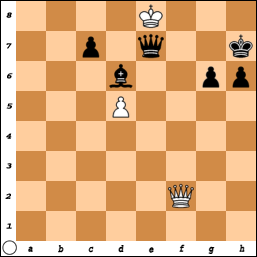
13.Qe2 Bxf3 14.Nxf3 Nc6 15.Be4 d5 16.Bxd5 exd5 17.Qe6+ Kh8 18.Qxc6 Rxf3 19.O-O-O Rxf2 20.Qxd5 Bd6 21.Kb1 Re8 22.Rde1 Rxe1+ 23.Rxe1 Rf1 24.Qe4 Rxe1+ 25.Qxe1 a5 26.a3 h6 27.Ka2 Qf6


28.Qe8+ Kh7 29.Qe4+ Qg6 30.Qe2 Qf7+ 31.b3 a4 32.Qe4+ g6 33.c4 axb3+ 34.Kxb3 b5 35.d5 bxc4+ 36.Qxc4 Qf3+ 37.Ka4 Qxa3+ 38.Kb5 Qxh3 39.Qe2 Qc3 40.Qf2 Qb4+ 41.Kc6 Qc4+ 42.Kd7 Qxg4+ 43.Kd8 Qg5+ 44.Ke8 Qe7#.


Sunday, October 9, 2016

Marshall Saturday Game/60 10/8/2016

On Saturday, I finished with a score of 1-1-2 in the tournament at the Marshall Chess Club.

Round Three: Philidor Counter Gambit

David Liu (USCF 1930) - Jim West (USCF 2200), Marshall Chess Club 10/8/2016

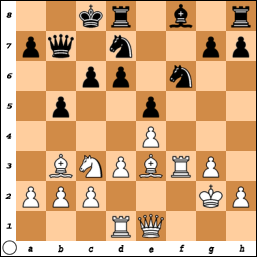
1.e4 e5 2.Bc4 d6 3.Nf3 f5 4.d3 c6 5.Nc3 Nf6 6.O-O f4 7.g3 b5 8.Bb3 fxg3 9.fxg3 Qb6+ 10.Kg2 Bg4 11.Qe1 Bxf3+ 12.Rxf3 Nbd7 13.Be3 Qb7 14.Rd1 O-O-O


15.a4 b4 16.Na2 d5 17.exd5 cxd5 18.d4 e4 19.Rf1 Bd6 20.c3 bxc3 21.Qxc3+ Kb8, draw.


Saturday, October 8, 2016

Friday, October 7, 2016

Substitute Teacher at MORA

On Thursday afternoon, I was the substitute teacher for two chess classes at the Museum of Russian Art, on behalf of 101 Discoveries.

Thursday, October 6, 2016

Pix from October Weekend FIDE

Last weekend, I snapped these photos during the tournament at the Marshall Chess Club.

                                          Saturday


                                            Sunday


Wednesday, October 5, 2016

Tuesday, October 4, 2016

Marshall October Weekend FIDE 10/2/2016

On Sunday, I drew this game in the tournament at the Marshall Chess Club.

Round Four: Pirc Defense

Michael Chu (USCF 1852) - Jim West (USCF 2200), Marshall Chess Club 10/2/2016

1.d4 Nf6 2.Nc3 g6 3.e4 d6 4.f3 c6 5.Be3 b5 6.Qd2 Nbd7 


7.Bd3 Nb6 8.Nge2 a5 9.Bh6 b4 10.Nd1 Bxh6 11.Qxh6 e5 12.dxe5 dxe5 13.O-O Qe7 14.Nf2 c5 15.Bb5+ Bd7 16.Bxd7+ Nbxd7 17.Rfd1 Qf8 18.Qxf8+ Kxf8 19.Rd6 Ke7 20.Rad1 Rhd8


21.R1d2 Nb6 22.Rxd8 Rxd8 23.Rxd8 Kxd8 24.Nd3 Nfd7 25.b3 Ke7 26.Kf2 Kd6 27.Nb2 c4 28.Ke3 cxb3 29.cxb3 Nc5 30.Nd3 Nxd3 31.Kxd3 Kc5 32.g3 a4 33.Nc1 axb3 34.axb3 Nd7 35.Ke3 Kb5 36.Nd3 f6


37.h3 Nb8 38.Nc1 Nc6 39.Ne2 Na5 40.Nc1 Nc6 41.Ne2 Kc5 42.g4 g5 43.Nc1 Nd4 44.Nd3+ Kb5 45.Nc1 Ne6 46.Nd3 Nd4 47.Nc1 Ka5 48.Kf2 Nc2 49.Ke2 Kb5 50.Kd2 Nd4 51.Ke3 h6 52.Kf2 Nc2 53.Ke2 Ka5


54.Kd2 Nd4 55.Ke3 Kb5 56.Kf2 Ne6 57.Ke3 Nf4 58.Ne2 Ne6 59.Nc1 Nc5 60.Kd2 Ne6 61.Ke3, draw.


Monday, October 3, 2016

Marshall October Weekend FIDE 10/1/2016

On Saturday, I won this game in the tournament at the Marshall Chess Club.

Round Two: Caro-Kann Defense, Exchange Variation

Jim West (USCF 2200) - Jason Li (USCF 1922), Marshall Chess Club 10/1/2016

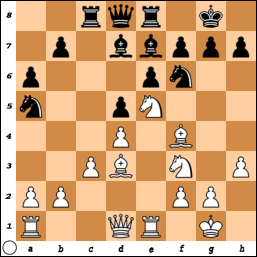
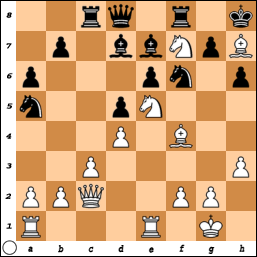
1.e4 c6 2.d4 d5 3.exd5 cxd5 4.Bd3 Nf6 5.c3 Nc6 6.Bf4 e6 7.Nf3 Be7 8.O-O O-O 9.h3 Bd7 10.Nbd2 Rc8 11.Re1 Re8 12.Ne5 a6 13.Ndf3 Na5


14.Ng5 Rf8 15.Qc2 h6 16.Bh7+ Kh8 17.Ngxf7+, Black resigns.


Sunday, October 2, 2016

$1.65 Million Chess Set

Read Eustacia Huen's article in Forbes.

Saturday, October 1, 2016

Pix from Sunday Game/45 9/25/2016

During Sunday's tournament at the Marshall Chess Club, I photographed the players.